Thursday, July 20, 2023

ND 2023 Pheasant Crowing Counts Up 30% Statewide

The number of roosters heard crowing during the North Dakota Game and Fish Department’s 2023 spring pheasant crowing count survey was up 30% statewide from last year. 

“We documented increased production for most of the state during 2022 brood routes compared to the last couple years, and we also confirmed high reproduction rates while aging hunter-submitted pheasant wings,” said R.J. Gross, department upland game management biologist. “So, the increase in pheasant density comes as no surprise despite the high snowfall this past winter.”

The primary regions holding pheasants showed 19.5 crows per stop in the southwest, up from 14.1 in 2022; 16.6 crows per stop in the northwest, up from 13.7; and 12.8 crows per stop in the southeast, up from 9.7. The count in the northeast, which is not a primary region for pheasants, was 3.3 crows per stop, up from 3.0 last year. 

“Current conditions are excellent across the state with adequate moisture this spring and early summer. These conditions should foster insect hatches, which would provide forage to chicks for brood rearing,” Gross said. “Pheasant chicks hatch from early June through late July. Much of nesting success will depend on the weather, and we will more accurately assess pheasant production during our late summer roadside counts, which begin at the end of July.”

Pheasant crowing counts are conducted each spring throughout North Dakota. Observers drive specified 20-mile routes, stopping at predetermined intervals, and counting the number of pheasant roosters heard crowing over a 2-minute period.

The number of pheasant crows heard are compared to previous years’ data, providing a trend summary.

ND State Game and fish Report  


Wednesday, June 14, 2023

Early Summer 2023 Pheasant Nesting Update

State-by-state reports from across the core pheasant range

June is go-time for ring-necked pheasants. 

Winter is way, way back in the rear-view mirror, and despite the season’s brutality across the northern parts of the pheasant range, pheasants were not obliterated from the landscape. Such is the toughness of our favorite gamebird.

And so nesting has begun. As nesting, hatching and raising broods goes, so go fall hunting prospects. Here is our state-by-state report from the core pheasant states. We’ll report again on hunting prospects, as always, at the end of summer, but wanted to give an early peak at what’s happening. 

The news is generally good. But one thing to keep an eye on will be summer moisture. While generally dry springtime conditions can be favorable to good incubating and brood rearing, continued and prolonged dry conditions can limit insect life, which is essential to feed and grow chicks. It can also affect habitat.

Here’s where we’re at. 

SOUTH DAKOTA

Coordinated By Matt Gottlob, South Dakota State Coordinator

Editor’s Note: Due to its extra in-depth nature, we placed the update for the number one pheasant state last for your perusal.

Winter Wrap-Up
Aberdeen - Winter was pretty tough up this way this year. Reports of bird fatalities in large numbers on certain tracts of land where people had walked late season hunting or shed hunting this spring.

Bon Homme, Charles Mix, Hutchinson, Yankton Counties - The winter was cold with heavy snow falls resulting in higher amounts of pheasant mortality. However, survival appears to anecdotally higher than expected with surviving pockets of adult birds being observed frequently.

Brule, Buffalo, Aurora and into Eastern Lyman Counties - The area had a long tough winter, starting with heavy snowfall and cold temperatures earlier than usual and continuing well into spring months. Luckily the pheasant population in the area was up from previous years to begin with and they seemed to find shelter belts and cattail sloughs to bring them through the winter much better than expected. Didn’t get the reports of dead pheasants in shelter belts around here as from other parts of the state and have seen quite a few roosters and hens this spring.

Brookings - The winter in the Brookings area was much like other portions of the state, with a lot of snow, wind, and ice. This combination created a challenge for all wildlife. Snow drifts filled in the small cattail sloughs, narrow tree belts and food plots, but the larger cattail sloughs and other larger blocks of winter cover provided thermal cover that was paramount for pheasant survival in a winter like we had. We had birds get through the winter.

Kennebec - Winter was tough in the South-Central part of the state with multiple day-long blizzards that resulted in around 60 inches of total snowfall. Not seeing as many pheasants this spring as in the fall, but they’re still out there where the habitat was able to get them through the winter.  

Watertown - In the Northeast the winter was pretty tough a couple of ice storms and the abundance of snow we had definitely had an effect on the birds. However with all the winter cover primarily the big cattail sloughs provided good cover and there was enough wind with the storms it seemed to keep a few spots in fields open for birds to forage. 

Woonsocket - Many landowners in the area assumed the winter was hard on pheasants but they made it through fairly well. Actually did not have a significant amount of snow; the drifting made it seem worse than it was. Most importantly, hen survival seemed very high.

Habitat Update
Aberdeen - Up to this point in the growing season the habitat is in pretty good shape, carrying lots of moisture over from winter. Although it has been very hot and dry the last 2 weeks and if that continues, will enter into a drought pretty quickly. 

Bon Homme, Charles Mix, Hutchinson, Yankton Counties - With conditions being as dry as they are, new CRP plantings aren't growing well enough to provide habitat in adequate amounts. This being the case, the birds will need to rely on habitat zones that were left undisturbed the last year.

Brule, Buffalo, Aurora and into Eastern Lyman Counties - The lack of a lot of spring rain has the nesting habitat off to a slower start than we would like but grass is coming, and hens are initiating nesting.

Brookings - Habitat conditions are off to a great start this spring. There are two sides to the winter we had. Because we had such dry conditions over the past 2 years, we needed the moisture. With the snowcover we had, habitat conditions are off to a good start, it is pretty dry in this area. Have noticed good insect and pollinator numbers, which will be crucial for chicks when broods begin hatching.

Kennebec - Habitat started out the spring growing well with some timely rains, but the rains have slowed now, and the grass seems to be stunted.  But many winter wheat fields look spectacular and are growing quite well.  We’re lucky in this area to have many acres of winter wheat so are hopeful that the birds will find those fields to nest in for the time being.  The southern reaches of my coverage area were hit was emergency haying of CRP last August and there wasn’t much regrowth throughout the rest of the fall.  

Woonsocket - Most of the habitat that is in CRP or like programs look to be ok even though the drought is taking its toll on other grasslands like pasture and hay ground. The safe nesting areas of CRP should still produce quality habitat as the native grasses and forbs can handle the stress of drought better than introduced species that make up most pasture and hay ground in this area. 

Nesting Conditions
Aberdeen - Nesting conditions are good, but we are at the point where we need to start getting some moisture. There were bugs flying around everywhere right away but have noticed a sharp decline in those since it started drying up.

Bon Homme, Charles Mix, Hutchinson, Yankton Counties - With the dry conditions, alfalfa (which can serve as a nesting source) is getting cut early because it's drying out early. This coupled with the limited new growth may make suitable nesting conditions sparse this year.

Brookings - Have yet to see any broods or hear of many broods on the ground so far, but nesting conditions are favorable for pheasants. Conditions have been pretty dry but grasslands in this area are really looking good. Everything seems to be just a little behind this year, so expect to really start seeing broods in the next week or two. There should be some good insect forage for chicks when they hit the ground.

Kennebec - Without rain, still faring well in terms of nesting conditions. Winter wheat is growing well, and Lyman County is one of the top producers of winter wheat in the state so we have that to fall back on even though our grasses may not be coming through as well. 

Watertown - Spring conditions are looking really good now, but we do need to catch a nice rain sometime soon.  

Observations 
Aberdeen - Have not seen a brood yet in my area but am hearing reports of people seeing them. Overall, had a lot of birds up here this past year and there were plenty of birds that made it through the winter. Seeing birds everywhere (good or bad) over the winter and spring, still seeing them out and about now. Spring conditions had been favorable up until the last couple weeks. If we can catch some moisture and lose some of the heat, should be sitting good going into fall 2023.

Bon Homme, Charles Mix, Hutchinson, Yankton Counties - Dry weather overall isn't necessarily a bad thing as long as there is nesting habitat present and dew/moisture from arthropods for broods to survive since pheasants don't need a lot of moisture (generally speaking). In contrast, a cold wet spring can often lead to nest failure and low brood survival due to the inability to properly thermoregulate at a young age. With this in mind, there is hope for demographic maintenance if not a population increase for this upcoming year. 

Brule, Buffalo, Aurora and into Eastern Lyman Counties - Haven’t seen any broods yet. Have bumped some hens off nests in the field. Temps in the area are high and could use some rain to keep the grasses coming.

Brookings - Have not seen any broods yet, but weather conditions have been good for nesting so far. Have had a few pop-up storms with a little bit of hail but nothing major.

Kennebec - Have not observed any early hatch broods yet, but have seen some nests while out in the field.  Haven’t gotten much rain at all this spring, but on the plus side that can also mean that nests are not drowning out.  Last spring, the dryness helped a lot of broods hatch and brought on a great hunting season filling the sky with birds.  Hopefully we can see that again this fall!   

Woonsocket 
The adult winter survival rate has definitely helped numbers given the drought’s impact on brood success, but worried as the drought’s severity has increased over the last few weeks.  Was worried last year though, and it turned out to be a successful year. The cold did linger this year but not into prime nesting season.

IOWA

From Todd Bogenschutz, Upland Research Biologist with Iowa DNR, as told to Josh Divan, Iowa State Coordinator for PF

Winter Wrap-Up
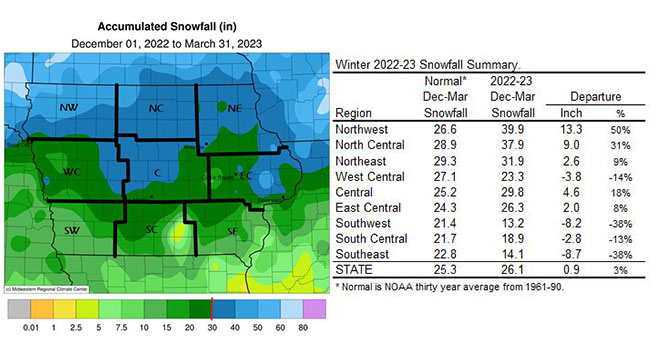
Winter snowfall was 30 to 50 percent above normal in the northwestern and north-central regions, but about normal to below normal in other regions. Over-winter survival of hens should have been normal to above normal in all regions, except NW and NC.


Habitat Update
Iowa has lost CRP like many other states, but overall our acres should be similar to last year. The cover looks great thus far this spring.

Regional Notes
Regional notes are always of high interest. Hunting was exceptional in the northwestern and north-central regions last fall, so hopefully this past winter didn’t knock us down in those regions; nesting success will be the key.  Bird numbers should improve in all other regions if we have favorable weather during nesting. Best hunting this coming fall will likely be across the north, and on the center of the state. 

Nesting Conditions
So far so good for nesting. It has been a cool spring but on the dry side statewide. Need to watch that.

Observations
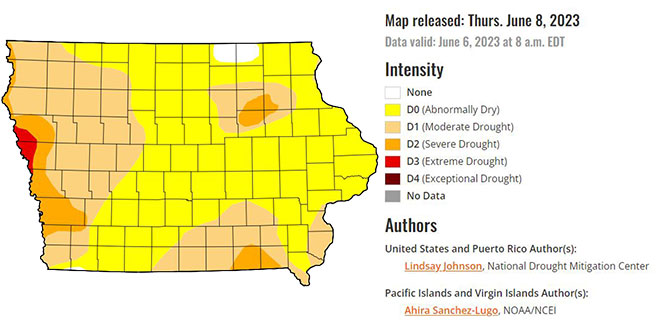
I had my first broods reported May 24 and 25 in southern Iowa. Indications are of a good start to the nesting season. But am a bit concerned that more and more of Iowa is slipping into drought already, with almost the entire state “abnormally dry” at a minimum. If that continues and conditions stay dry, it could open up virtually all the state to emergency haying.


Read the full Pheasants Forever post for MN, ND, NE, and Montana

Wednesday, May 31, 2023

Pheasant Fest returns to South Dakota in 2024

Biz Pointing Pheasant 2023


Pheasant Fest is returning to South Dakota next year. It’s the second time Sioux Falls will host the three day event. 

MARCH 1-3
DENNY SANFORD PREMIER CENTER
SIOUX FALLS, SD

https://www.pheasantsforever.org/pheasant-Fest.aspx 

The last time was back in 2018.

Organizers kicked off today’s announcement with a bang.

Dozens of hunters took aim at shooting clay pigeons this morning at Hunter’s Pointe near Humboldt.

It’s to help promote Pheasants Forever’s big three day event next year.

“We are absolutely ecstatic to have National Pheasant Fest and Quail Classic coming back to South Dakota,” Pheasants Forever Jared Wiklund said.

But today it’s about having fun.

“It’s just away to bring out all of our sponsors and donors and members and chapters,” Wiklund said.

Read the full KELO article


Tuesday, May 9, 2023

The Complete Guide to Public Land Pheasant Hunting

Phasianus colchicus took the Midwest by storm a hundred years ago, and the ring-necked pheasant is still the king of game birds for most hunters. We roam the mid-section of our vast nation in search of the elusive ghost of our dreams. And while getting there may be half the fun, being there is when the rodeo really begins.

Where To Find Public Land Pheasants

The Cheshire Cat in Alice in Wonderland said it best: “If you don’t know where you’re going, any road will take you there.” How do you navigate the millions of acres of public land and walk-in ground just waiting for you to drop the tailgate and unclip your dog’s leash? Rather than wandering, perplexed as a hunter on Rodeo Drive, here’s how to map out your pheasant quest.

It starts with a destination, dictated in large part by how far you’re willing to travel. If you know how to read, you’ve already got an idea of where you want to go. Each region has sweet spots handed down from father to son, shared by multi-generational groups and “discovered” by newbies dazzled by clouds of birds darkening the sky at the end of a cut-cornfield drive. My revelation came at the nub of an ancient shelterbelt in South Dakota. It was being pushed by two friends while I shivered, hopes high and temperature low. Out of the mist rose a mob of what I thought were blackbirds they were so numerous, until a roar of wings and telltale cackles broke the still air.

I missed twice, shook my head, reloaded and dropped a late riser whose technicolor pelage vibrated against the pristine snow even when stilled by my shot. That was a good year, but even a bad year in South Dakota is better than most other places combined.

Other states have their proponents and having explored them all after three decades roaming public land, I understand the allure of each. Northeast Montana, Iowa, Nebraska, and western Kansas are all strong contenders for the bronze and silver medals. Not coincidentally, most of those states have sophisticated public-access initiatives to help hunters chase ringnecks across vast prairies and through shin-tangling thickets. “Walk-in” programs are the golden key that unlocks the door; start your quest there, long before you fill the tank and crate the dog.

Dickinson and Mott, North Dakota are worth your attention. They’re lower-key, smaller towns with fewer amenities than most, but surrounded by public access. Williston’s oil boom has subsided and lodging options are myriad. The rolling hills beckon, if you don’t mind the mix of drilling and development alongside your new favorite cover. Plentywood and other small towns in northeast Montana along the “High Line” are also on my radar. Western Kansas towns including Norton, Goodland, Jetmore and Osborne are podium-contenders, offering a 365-day license bargain and warmer late season weather.

Like the Oscars, I’m saving the best for last, but the supporting cast of South Dakota towns east of the Missouri River offer plenty of opportunity. Watertown, Aberdeen, Brookings, and Redfield welcome hunters and have plenty of public access. South Dakota counties with the highest pheasant harvest numbers include Brown, Beadle, Brule, Lyman, and Spink. Each has charm, varied habitat, and sometimes, more than you bargained for. Circumnavigating a small pond near Watertown, my dog’s GPS collar sounded “point.” The cattails were so thick I had a hard time seeing him, quivering, literally at my feet. The wirehair’s hunched-up posture should have alerted me—he had pointed a raccoon. Everyone came out of that tussle unscathed; another bird soon filled my vest, and all was right in the world once again. We celebrated with a visit to the Terry Redlin museum.

I’ve shot (and missed) birds near every town and in every county on this list and can honestly recommend any of them. But for me, Huron, South Dakota is Ground Zero for ringnecks. Along with high harvest numbers (10 birds for an average 4.5 days hunted in pandemic year 2020), Beadle County’s seat has an ace up its sleeve: 124,000 acres of public access within 60 miles. It’s at a nexus of federal, state, and private land open to hunters. There’s a diverse mix of habitats from tall-grass prairie to marsh, shelterbelts to creek bottoms and cropland. Add creature comforts including retail, restaurants, campgrounds and hotels. The gravy on your spuds is a savvy- yet-small-town culture that embraces pheasant hunting, visiting hunters, and their economic benefits. They even celebrate every November with a Ringneck Festival and Bird Dog Challenge, should you want a little friendly competition and camaraderie. There is a sense of community not found in bigger towns and urban centers—a breath of fresh air many of us seldom get in the workaday world.

Read the rest of the Gun Dog Magazine article including topics:
What To Do When You Get There

How To Hunt Public Land Pheasants

Pheasant Hunting Strategy & Tactics


Monday, October 24, 2022

Pheasants Forever and Quail Forever Hiring Regional Representative - Eastern Kansas

POSITION SUMMARY: 


Pheasants Forever and Quail Forever are seeking individuals with the talent, passion, and desire to promote and grow the nation’s leading upland wildlife habitat conservation organization.  The Regional Representative position is responsible for grassroots mission delivery by engaging communities, chapters, volunteers, and members within the assigned region.  The successful applicant will assist chapters to maximize their fundraising and mission impact at the local, state, and national levels.  Additionally, the Regional Representative will work with Development teammates to identify, cultivate, and solicit mission-driven donations.


RESPONSIBILTIES and EXPECTATIONS:


  • Provide proactive guidance and customer service to chapters across the region.  A primary focus of the duties will include increasing memberships, merchandise sales, and facilitating contributions to national and state programs.
  • Identify and develop prospects for PF and QF fundraising campaigns.
  • Create new chapters and restructure existing chapters to encourage strong volunteer committees that are striving to fulfill the mission of the organization.
  • Work with chapters to increase the efficiencies and effectiveness of fundraising events.
  • Develop and use methods of regular communication with chapter leaders to keep our volunteers informed and motivated about the organization’s mission, activities, goals, and fund-raising efforts.
  • Work as a team member to develop and deliver a consistent message about our habitat, education and outreach and advocacy mission. 
  • Promote the PF and QF mission, as well as related fundraising efforts, to support the organization.
  • Plan and conduct district meetings and state meetings with chapters.  


MINIMUM QUALIFICATIONS:


  • B.A./B.S. in Marketing, Education, Business, Wildlife Biology, or related field with practical experience. Prior experience working with volunteers and fundraising preferred.
  • Thorough knowledge of PF and QF’s mission, model, and activities.
  • An energetic, well-organized, detailed, self-starter who has a strong record of leadership and teamwork.
  • Superior interpersonal and presentation skills and the ability to collaborate effectively with diverse constituencies, including volunteers, partners, and team members are a must. 
  • Demonstrated experience as an innovative and creative thinker with a proven success of following-through with their ideas.
  • Demonstrated set of skills that bring strong organizational skills, leadership, and sales to the position.
  • Demonstrated ability to work and interact with sportsmen.
  •  
  •  Check out the full Job Posting 

Friday, September 9, 2022

ND Pheasant Count UP 9% Over 2021


North Dakota’s roadside surveys conducted in late July and August indicate pheasant and gray partridge were up from last year, while sharp-tailed grouse numbers were down.

State Game and Fish Department upland game supervisor Jesse Kolar said the annual upland late summer counts showed mixed results. “We observed an increase in pheasant and partridge densities and reproductive rates with average brood size and age ratios, while sharptails decreased in density but had improved reproductive rates from 2021,” Kolar said.

Total pheasants (49) observed per 100 miles are up 9% from last year and broods (5.3) per 100 miles are up 8%. The average brood size (6.2) is up 7%. The final summary is based on 278 survey runs made along 100 brood routes across North Dakota.

Observers in the northwest counted 11 broods and 96 pheasants per 100 miles, up from eight broods and 68 pheasants in 2021. Average brood size was six.

Results from the southeast showed five broods and 39 pheasants per 100 miles, up from three broods and 24 pheasants in 2021. Average brood size was five.

Statistics from southwestern North Dakota indicated five broods and 48 pheasants per 100 miles, down from six broods and 59 pheasants in 2021. Average brood size was five chicks.

The northeast district, generally containing secondary pheasant habitat with lower pheasant numbers compared to the rest of the state, showed two broods and 18 pheasants per 100 miles, compared to three broods and 24 pheasants last year. Average brood size was seven.

Kolar said sharptail hunters should expect to find more hatch-year grouse this fall.

“The rangeland vegetation is significantly taller, and there will be many more areas to search to find grouse,” he added. “However, we have not had significant amounts of precipitation since mid-July, upland rangelands may not be as productive as hillsides or low-lying riparian areas, particularly if the fall remains hot. Although the densities were highest in the southwest, the relative trends remain highest in the prairie potholes along the Missouri River.”

Sharptails observed per 100 miles are down 30% statewide. Brood survey results show observers recorded two sharptail broods and 13 sharptails per 100 miles. Average brood size was six.

Generally, Kolar said, most of the partridge harvest is incidental while hunters pursue grouse or pheasants. But this year, with partridge numbers looking impressive, he said there may be pockets where hunters could focus primarily on partridge.

“Huns have rebounded, and the last time they were this good was in 2015,” Kolar said.

Partridge observed per 100 miles are up 46%. Observers recorded one partridge brood and 12 partridge per 100 miles. Average brood size was 10.

The grouse and partridge seasons open Sept. 10 and continue through Jan. 1, 2023.

The pheasant season opens Oct. 8 and continues through Jan. 1, 2023. The two-day youth pheasant hunting weekend, when legally licensed residents and nonresidents 15 and younger can hunt statewide, is set for Oct. 1-2.

Read the original ND Game and Fish article

Iowa 2022 Pheasant Numbers Nearly The Same As 2021


Results of Iowa’s 2022 pheasant population survey are in and the results were nearly identical to that of 2021, when hunters harvested the highest number of roosters in more than a decade.

The annual August roadside survey found Iowa’s statewide pheasant population to be slightly under 20 birds per 30-mile route.  

Within the survey, the northwest, west central and north-central regions again had the highest counts within the state, followed by the northeast and central regions. The full report is available at www.iowadnr.gov/pheasantsurvey.

“If hunters enjoyed last year, they should enjoy this year. Pheasant hunting will again be good for most of the state, with the best hunting being north of Hwy. 30,” said Todd Bogenschutz, upland wildlife research biologist with the Iowa Department of Natural Resources.

Based on the results of the August roadside survey, Iowa hunters can expect to harvest 300,000 to 400,000 roosters this year, which is similar to last year, when the harvest was the highest in more than a decade.

“Bird harvest relies heavily on the number of hunters in the field and the past two years saw highest number of pheasant hunters since 2009, and that has translated into our increased harvests,” Bogenschutz said. “The birds are there, so the harvest totals will depend on how many hunters return.”

An estimated 63,000 hunters participated in 2021, a slight increase over 2020.

While the pheasant count varied by region, the quail count was more consistent; and this year, it was consistently higher across southern Iowa’s quail range.

“We had a lot of anecdotal reports of quail whistling this summer and that increase was reflected in the survey,” Bogenschutz said. The highest counts came from southwest Iowa, followed by the south-central region.

Iowa’s partridge population was unchanged from last year, with the better numbers coming from the northcentral region. Iowa’s rabbit population was also unchanged from last year with the better population in the south-central region, but good numbers across the state.

The annual August roadside survey has been collecting data on Iowa’s upland game populations since 1962.

Hunters have the opportunity to hunt these species on additional acres of private land enrolled into the popular Iowa Habitat and Access Program (IHAP).

Enrollment in the program is at an all-time high of nearly 32,000 acres. The IHAP allows hunters access to the portion of the property covered by the agreement, from Sept. 1 to May 31. Conservation officers will provide assistance, and enforcement, if needed.

  • Youth pheasant season is Oct. 22-23
  • Pheasant season is Oct. 29-Jan. 10, 2023
  • Quail season is Oct. 29-Jan. 31, 2023
  • Rabbit season is Sept. 3-Feb. 28, 2023
  • Partridge season is Oct. 8-Jan. 31, 2023
  •  
  • View the original Iowa DNR article


Thursday, September 8, 2022

MN 2022 Pheasant Count UP 18%


Pheasant numbers in Minnesota increased 18% from 2021, and exceeded the 10-year average by similar amount, according to the Minnesota Department of Natural Resources’ annual roadside pheasant survey.

When the pheasant hunting season opens on Saturday, Oct. 15, bird numbers are expected to be strong.

“The weather really cooperated this year in terms of producing favorable nesting conditions for pheasants,” said Tim Lyons, DNR upland game research scientist. “Pheasant numbers are generally as good or better than last year.”

This year’s statewide pheasant index was 48 birds per 100 miles of roads driven. Compared to 2021, all regions saw an increase in pheasant numbers except the southwest, which saw a decrease of 8%.

Weather and habitat are the main influences on Minnesota’s pheasant population trends. Weather causes annual fluctuations in pheasant numbers, while habitat drives long-term population trends.

Habitat factors

Conservation Reserve Program acres in particular play a large role in providing habitat for pheasants in Minnesota. The program, authorized under the federal Farm Bill, pays farmers to remove environmentally sensitive land from agricultural production and restore vegetation that will reduce soil erosion, improve water quality, and provide habitat for wildlife and pollinators.

Despite a long-term downward trend in CRP enrollment, there was a net increase in CRP acres in 2022 as approximately 5,000 additional acres were enrolled. In addition to CRP acres, there were more than 7,000 acres protected through easement programs like the Conservation Reserve Enhancement Program and Reinvest in Minnesota. An additional 9,000 acres of habitat were permanently protected through U.S. Fish and Wildlife Service acquisitions and by the DNR as wildlife management areas.

Read the FULL DNR report HERE


Thursday, August 18, 2022

ND 2022 Spring Pheasant Counts Down 22%

The number of roosters heard crowing during the North Dakota Game and Fish Department’s 2022 spring pheasant crowing count survey was down 22% statewide from last year.

“The decrease came as no surprise,” said R.J. Gross, upland game management biologist. “We documented below average production from late summer roadside counts and the hunter harvested wing survey confirmed a 2-to-1 juvenile to adult ratio, which are lingering effects from the drought of 2021.”

The primary regions holding pheasants showed 14.1 crows per stop in the southwest, down from 18.4 in 2021; 13.7 crows per stop in the northwest, down from 14.3; and 9.7 crows per stop in the southeast, down from 14.5. The count in the northeast, which is not a primary region for pheasants, was 3.0 crows per stop, down from 5.2 last year.

“Current conditions are improving across the state with adequate moisture this spring. These conditions should foster insect hatches, which would provide forage to chicks for brood rearing,” Gross said. “Pheasant chicks hatch from early June through late July. Much of nesting success will depend on the weather, and we will more accurately assess pheasant production during our late summer roadside counts, which begin at the end of July.”

Pheasant crowing counts are conducted each spring throughout North Dakota. Observers drive specified 20-mile routes, stopping at predetermined intervals, and counting the number of pheasant roosters heard crowing over a 2-minute period.

The number of pheasant crows heard are compared to previous years’ data, providing a trend summary.